
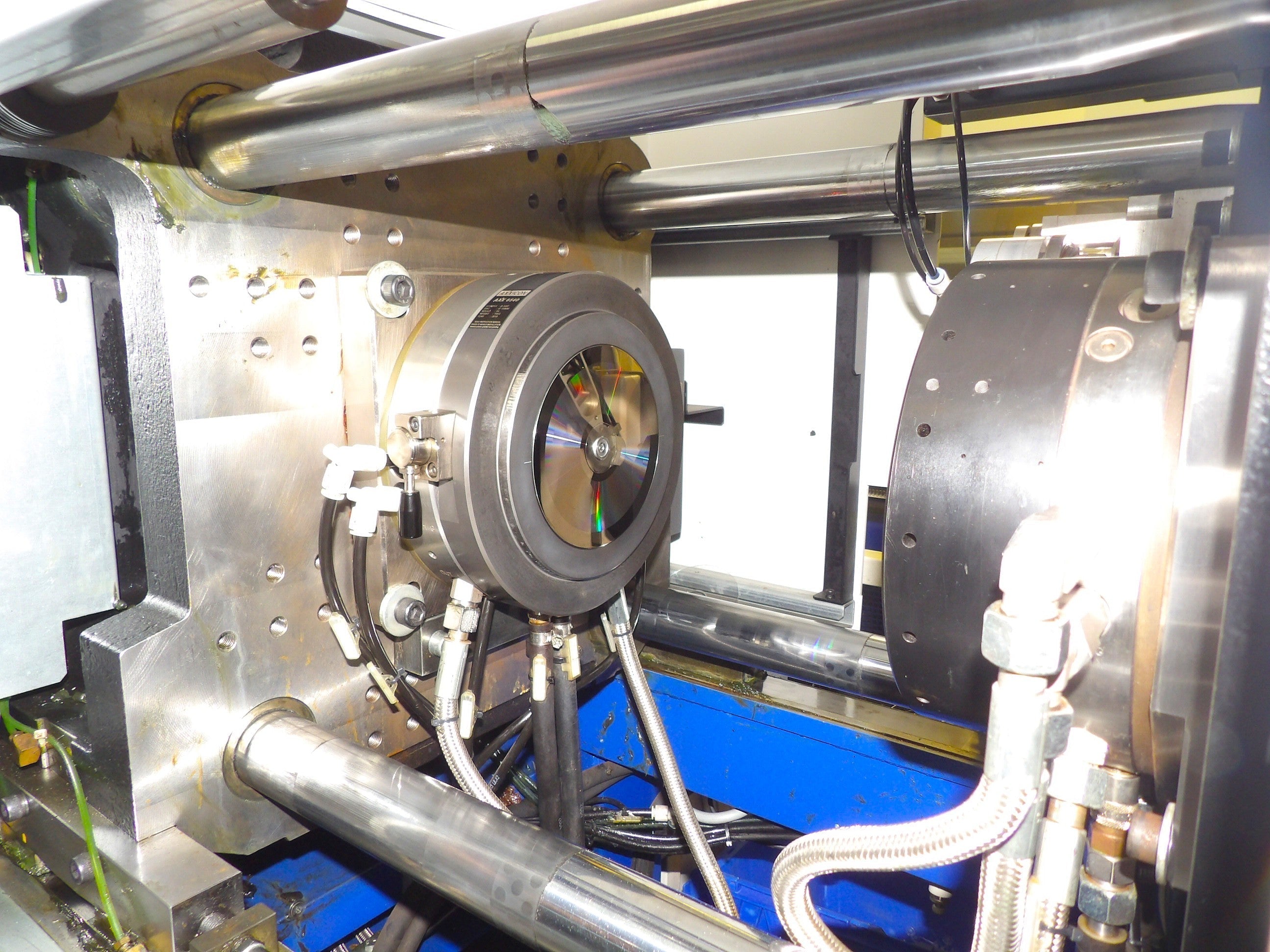
There are two forms of producing data onto CD or DVD optical discs. One is duplication, where blank discs are loaded into drives and the data is imprinted onto them. If you lived through the 90s & 00s, it is really not a lot different to copying CDs for your friends in your computers CD or DVD drives, only commercially the machines are quicker and quality is more assured.
The other method is replication, where using a master, sometimes referred to as a stamper, hot polycarbonate is pressed, leaving the data impression on the polycarbonate disc. The disc is then metallicized using aluminium to form a reflective surface and then a gloss lacquer is applied to seal the disc. Discs then move on to any printing , followed by assembly where they meet the packaging.
Replicated CDs are more reliable than duplicated CDs, in that they are generally read successfully by a broader range of players. It is often referred to a the "proper" way or as "real" CDs.
Here in the UK, we are proud to have the only replicator machines left operating in the country, which means we can produce these "Proper" CDs very quickly in relatively high numbers. Our replicator lines produce a disc every 3.5 seconds and we have two of them, so in an 8 hour day that's almost 17000 CDs being produced. Not to brag, be we operate 10 hours a day on average!!!


