
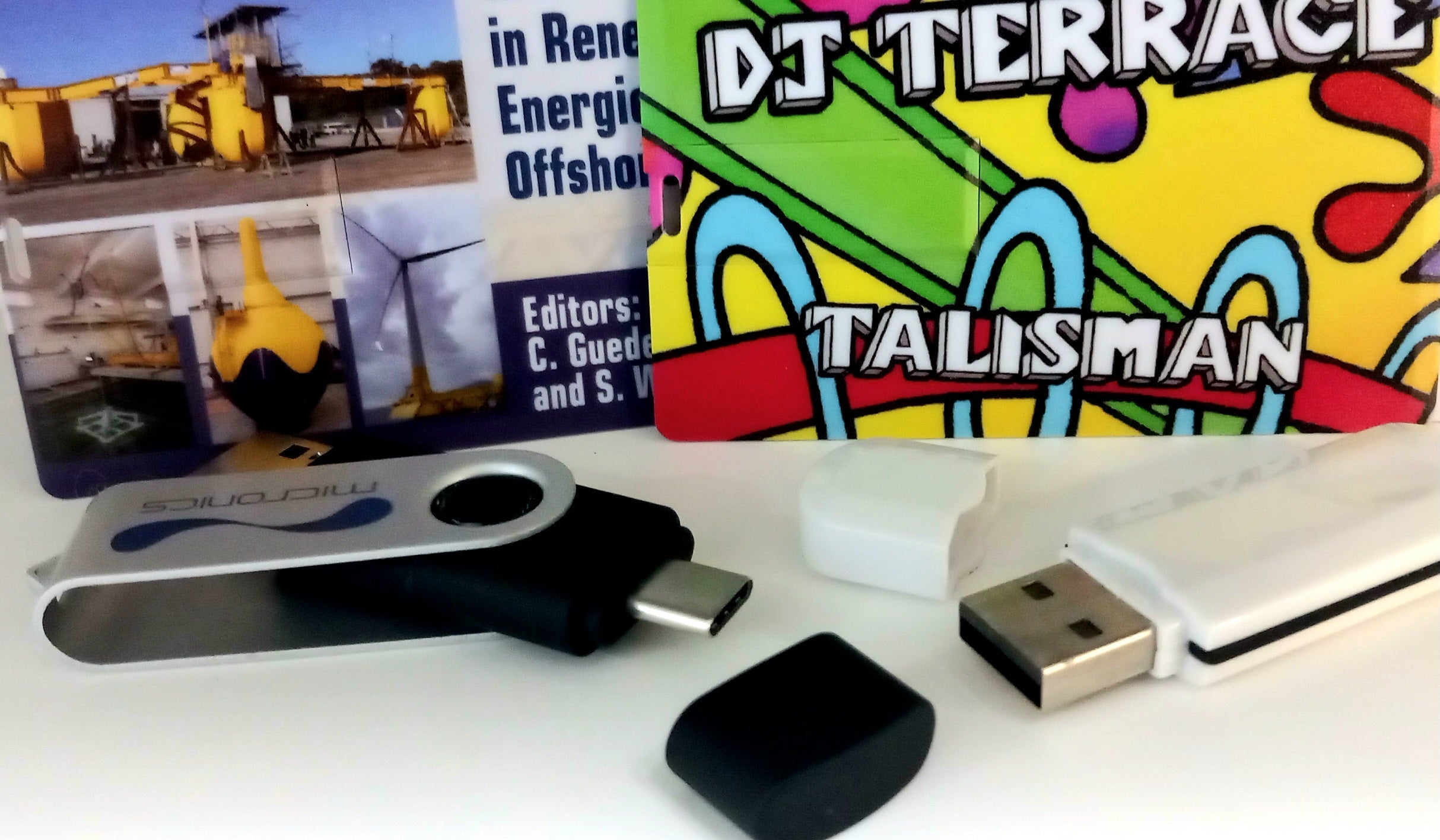
It's an interesting topic when any type of media is the subject of possible obsolescence and the twists and turns of the debate can be very opinion orientated.
As far as USB disks are concerned there is still a significant demand for the media and a growing novelty custom market. Far from the simple days of USB A sticks with lids developing into the now common twister style USB drive architecture, there are now Wooden, Moulded Rubber, LED and even Transforming USB drives a plenty.
What is more interesting is the development of USB ports and how that has affected the USB flash drive market. With even Apple Computers and iPhone conforming to unifying ports and cables post The European Union's Common Charger Rules. USB C has eventually emerged triumphant as being the common ground for all devices. This means that now, some years later, the USB flash drive has moved on and evermore USB C driven products are available.
So what does USB C mean for flash drive media? Well, it means that the media works with all Computers, Tablets & Mobile phones and has capacities of up to 4TB. That's huge against a standard Blu-ray discs 100GB capacity - That said we will be having a look at recent years development of the 200TB Blu-ray discs! This cross device and manufacturer development and the functional speed of solid state Flash Drives means that this media has new grounding within the data storage industry.
One of the most important factors here is the use within mobile phone devices. Smart Phones have all but replaced a large proportion of domestic computers and the demand for storage capacity is high. The uniformity of USB C working with Smart Phone platforms offers a compact storage solution for digital photographs, Audio-Visual files and documents.
Further more, smart phones are becoming increasingly popular as an independent gaming platform. A range of games can now be played from USB storage devices and even more so through use of game emulators. This advances the mobile Smart Phone to move into a pole position for offering everything on one device that would have been at least 3 or 4 different devices in an average household less than 10 years ago. Arguably a single Smart Phone delivers reliable Television services, Telephone services, Computer Services, Gaming Services, even Thermostat, Lighting and Appliance controls. Quite an incredible feat.
From our experiences in recent years at Alpha Duplication, we see large volumes of back catalogues from within the music industry utilise the USB format over CD as there could often be many disks to produce, rising product costs. We often produce Credit Card style USB catalogues in a digipack designed to hold the Credit Card USB Drive. This achieves 2 sides of the Credit Card USB Drive itself and multiple print options for external packaging with plenty of artwork space.
The audio itself can then be played on anything with a USB port such as Computer, Mobile Phone and Car entertainment systems and of course, the catalogue doesn't have to be audio. It could be audio visual files for watching movies or recordings, or even a catalogue of stock image files for designers or home crafters. All still relevant in the technologically developing world.
Another consideration when researching what format your data should take is security. CDs opened the flood gates when CDR discs could be burned at home in relatively affordable computers. The Home Taping Boom from the 80s, where the BPI (British Phonographic Industry) brandished the famous slogan "Home Taping is Killing Music" as a reaction to a rise in producing home cassette tape copies, was repeated on mass in the late 90s when CDRs enabled domestic users to duplicate data so easily. It shows how little CDs offer in the way of security. USB drives, when duplicated in the correct manner can offer significantly more security options and are significantly harder to duplicate for the average Joe giving the format an slight edge on it's closest rival.
Overall, we believe it is incredibly difficult to justify the USB Storage format anywhere near obsolete. It is versatile, fast and secure with a large capacity which for certain data types or data volumes is ticking all the boxes. The USB Drives are here to stay and their uses as well as their physical format continues to evolve. Stay tuned...


